What is an AI playbook? (And why most legal teams don’t have one)
Contract playbooks are not new to Legal. A few years ago, they became one of the most discussed ways to make contract review more consistent: document preferred positions, fallback clauses and escalation rules so lawyers do not have to reinvent the answer for every negotiation.
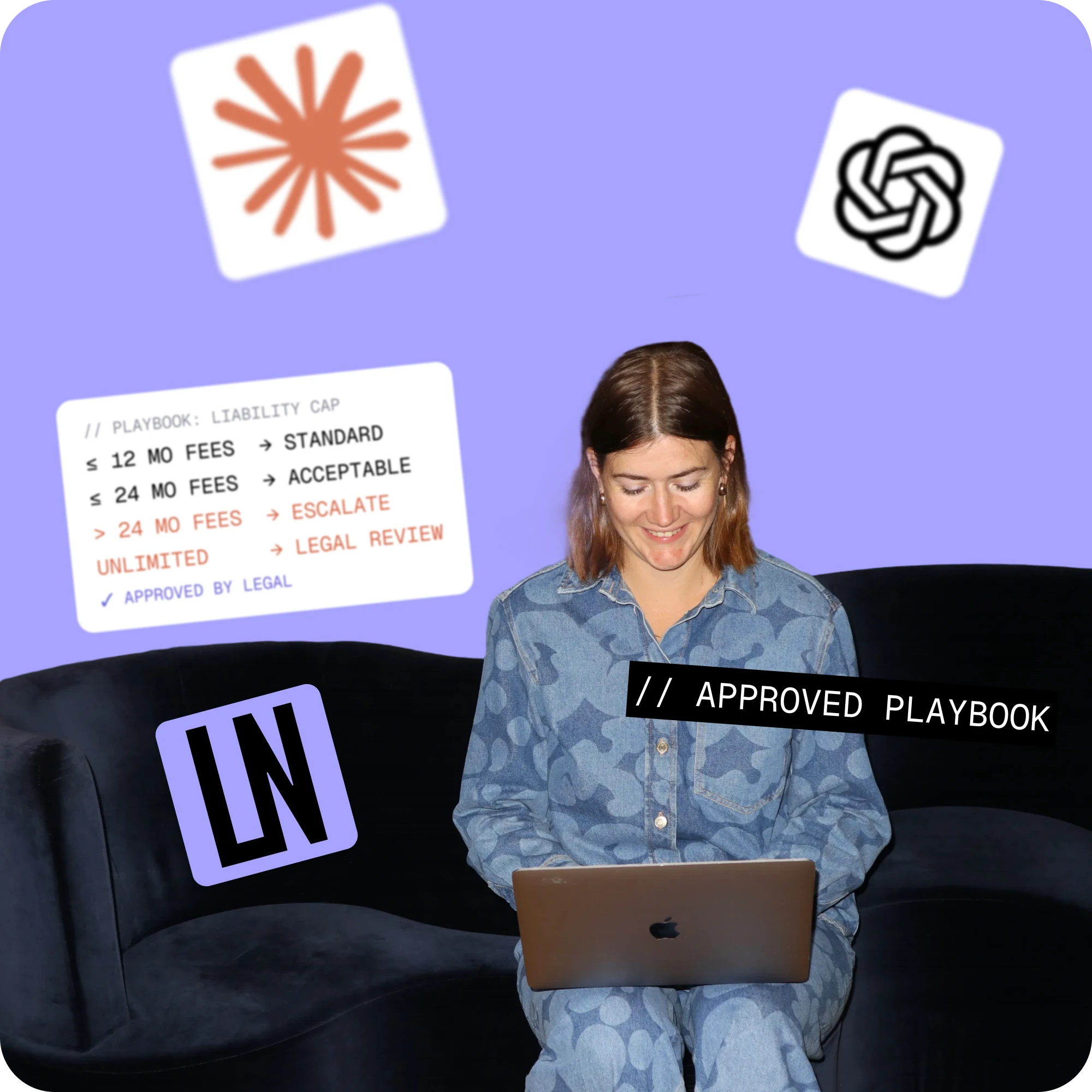
Many legal teams built them. Others captured the same knowledge in clause libraries, templates, negotiation guides and internal documents.
AI changes what a playbook needs to do. If software is now reading and reviewing contracts, the playbook can no longer be useful only as guidance for a lawyer. Legal’s positions need to be structured so they can be applied consistently by the system, while Legal remains responsible for deciding what those positions actually are.
What is an AI playbook for Legal?
The term AI playbook is still developing and is already used in more than one way. In March 2026, The Recorder published AI on the Contracts Stage: Enter the AI Playbook, by Cynthia J. Cole and Anna von Spakovsky, discussing AI playbooks as part of the in house legal toolkit.
In contract review, an AI contract playbook can be understood as a structured version of the positions Legal wants applied when software analyses a contract. It can cover acceptable liability caps, governing law, payment terms, required clauses, fallback positions and the deviations that require human escalation.
The legal knowledge itself is not new. What changes is how explicit it needs to become if software is going to apply it consistently.
From guidance for lawyers to rules software can apply
A traditional playbook might say that liability should normally be capped at 12 months of fees, while a higher cap may be accepted in certain circumstances. An experienced lawyer can interpret that guidance in the context of a negotiation.
An AI contract playbook needs greater precision. Legal might decide that 12 months of fees is the standard position, up to 24 months is acceptable for a defined category of contracts, anything above that requires escalation and unlimited liability always needs Legal review.
The legal judgement has not changed. Legal has made the position explicit enough to be applied repeatedly. An AI playbook should not ask AI to invent the organisation’s legal position. It should make the position Legal has already decided usable in AI assisted work.
Why most legal teams do not have one
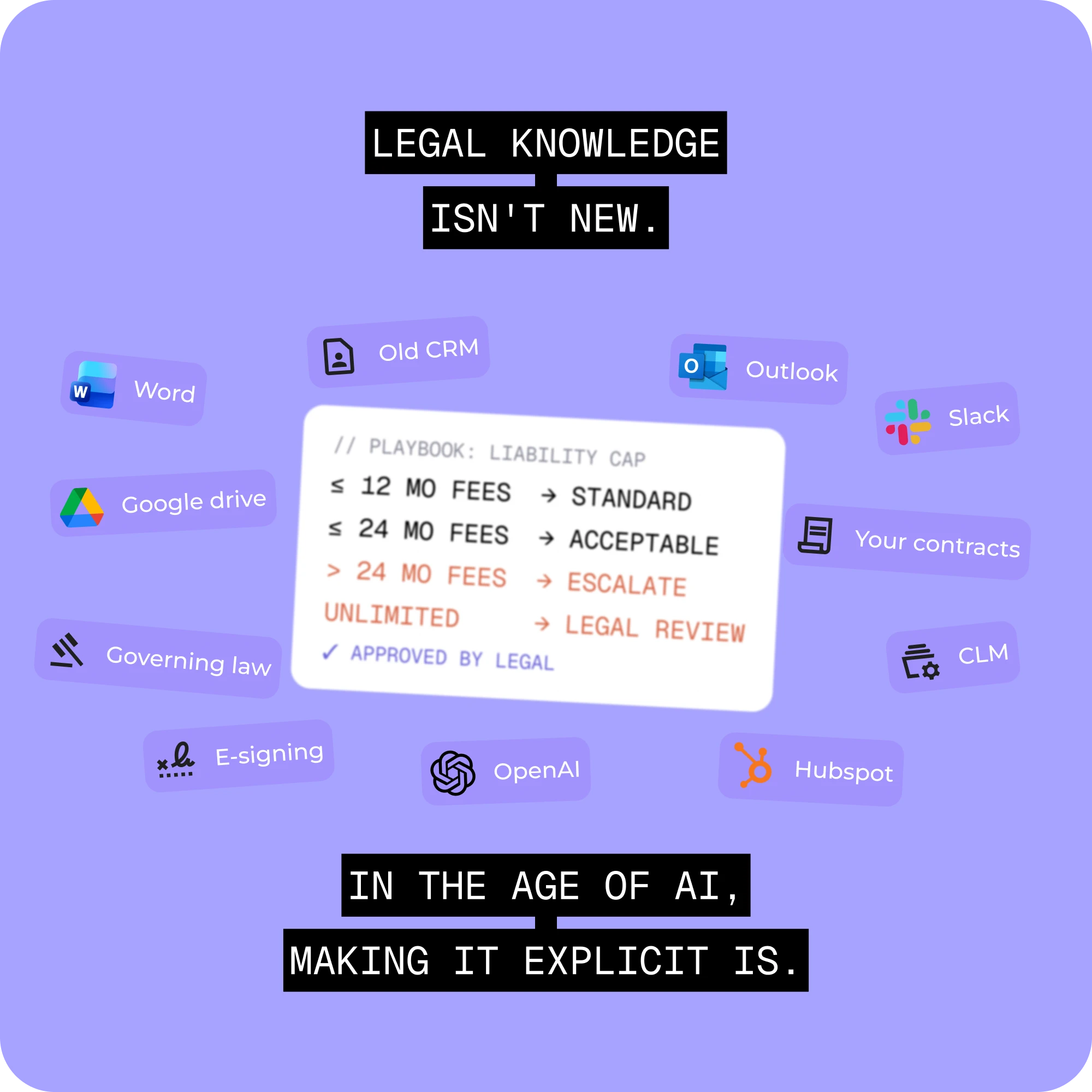
Many legal teams already have contract playbooks. What they may not have is a playbook structured so that AI and software can apply their approved positions consistently.
Legal knowledge rarely exists in one neat source. Some sits in the current template, some in a clause library or negotiation guide, and some in previous redlines and contracts. Experienced lawyers also know exceptions and negotiating positions that may never have been formally documented.
A conventional playbook can tolerate some ambiguity because a lawyer interprets it. Software needs the underlying policy to be more explicit. The challenge is therefore not simply to write another playbook, but to identify the organisation’s actual legal standards and decide which positions should become current policy.
AI can help build the playbook. Legal still decides the policy
In Lexnus, an organisation can upload existing contracts and templates. AI analyses the material and proposes a playbook clause by clause. Legal then reviews, adjusts and approves the proposed rules before they become policy.
That approval matters because contract history shows what an organisation has agreed before, not necessarily what it should agree in the future. A particular liability cap may have been a one off exception, or the organisation’s position may simply have changed.
AI can help uncover the standards and patterns in existing material. Legal decides which of them become policy.
How an AI contract playbook works in practice
Once the playbook has been approved, it can be used when new contracts are analysed. AI reads the contract, identifies the relevant clauses and extracts the information needed for the policy check.
The approved playbook contains the rules Legal has set. The Lexnus rule engine evaluates the extracted information against those rules and determines whether the contract complies with policy or requires human escalation.
AI interprets the contract. The rule engine determines the policy outcome. The same contract evaluated against the same version of the policy should produce the same result.
Human judgement remains important when something falls outside the approved rules, but the lawyer reviewing the exception can see what the policy is and why the contract requires attention rather than starting the analysis from scratch.
An enterprise AI playbook should work wherever the contract comes from
Contracts do not all originate in one system. They may be created internally, sent by a counterparty, worked on in Word or produced through another connected tool. The organisation’s legal standard should remain the same.
In Lexnus, contracts can be evaluated against the same approved policy whether they were created in Lexnus, received from a counterparty or produced through a connected tool.
This is where an enterprise AI playbook becomes more than guidance for one review tool. It becomes a reusable representation of the organisation’s approved legal policy, while the contract itself can come from somewhere else.
From legal playbook to operational policy
The interesting thing about AI playbooks is not that Legal has suddenly discovered playbooks. It is that AI changes what a playbook can be used for.
A document that once helped lawyers remember the organisation’s preferred positions can become an operational representation of legal policy that can be applied consistently when contracts are drafted, received or reviewed with AI.
AI can help find and interpret the information. Legal still decides the rules.
Turn your existing contracts into an approved playbook
Lexnus analyses existing contracts and templates to propose a playbook clause by clause. Legal reviews, adjusts and approves the rules before they become policy. Once approved, the playbook can be used to evaluate contracts consistently and identify what complies, what does not and what needs human attention.
Frequently asked questions
What is an AI playbook for legal teams?
An AI playbook is a structured representation of the positions and rules Legal wants applied when software analyses contracts. It can cover preferred terms, acceptable alternatives, required clauses and escalation rules. Legal remains responsible for approving the policy.
How is an AI contract playbook different from a traditional contract playbook?
A traditional contract playbook is primarily guidance for people reviewing and negotiating contracts. An AI contract playbook structures those legal positions so software can apply them consistently during contract analysis.
Does AI decide the rules in an AI playbook?
Not in Lexnus. AI can analyse existing contracts and templates and propose a playbook clause by clause. Legal reviews, adjusts and approves the playbook. The rule engine then uses those approved rules to determine the policy outcome.