The Lexnus team ·
AI hallucinations keep reaching the courts. Here’s the pattern Legal should care about.
The courts are not punishing the use of AI. They are punishing the absence of a check.
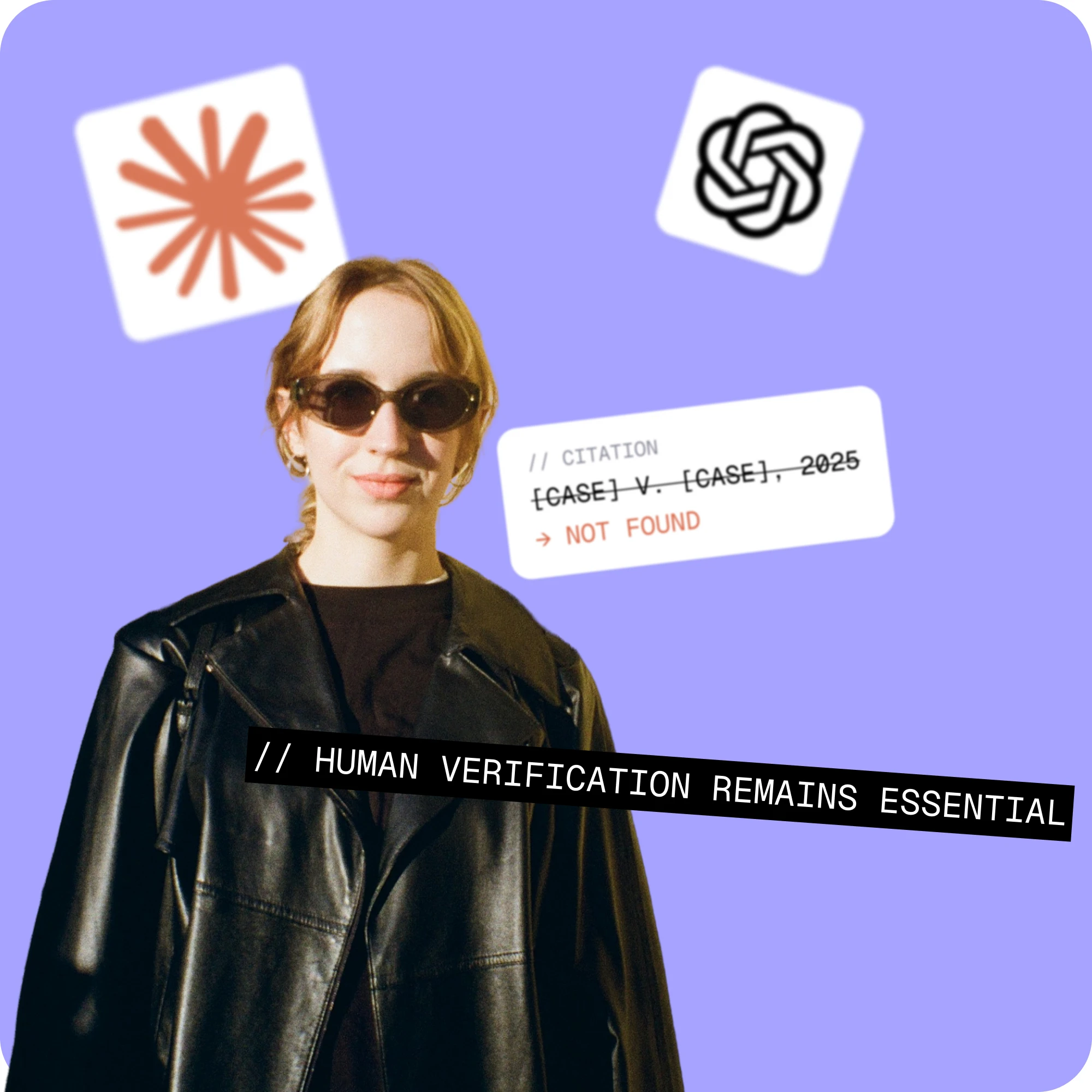
On 3 June 2026, the Ninth Circuit suspended two California immigration lawyers from practising before the court for six months. Their briefs cited cases that did not exist and attributed quotes to real rulings that never contained them. The court’s own words: a competent lawyer must do more than prompt a generative AI tool and check that the citations look roughly on point. A competent lawyer must read and reason.
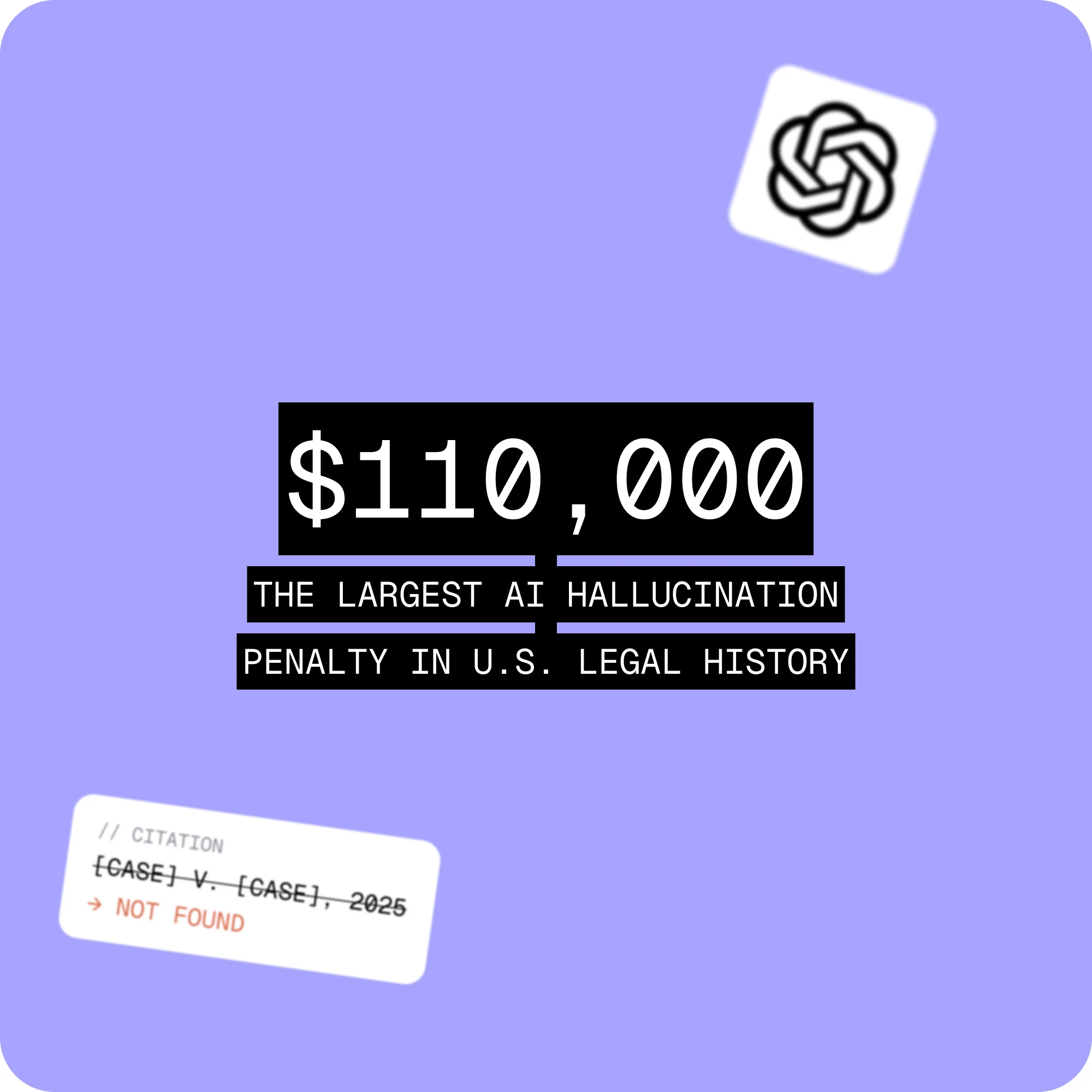
Earlier this year, a federal magistrate judge in Oregon had gone further. Two attorneys representing a client in a family dispute over a winery were hit with fines and fees totalling around 110,000 dollars, the largest single AI hallucination penalty in US legal history so far. The case was dismissed with prejudice.
These are not isolated stumbles by careless lawyers. They are two entries in a database that the legal researcher Damien Charlotin has been building since 2023: a running record of court and tribunal decisions involving alleged or confirmed AI hallucinations, from fabricated case law to invented quotes and citations. New entries arrive every week. Charlotin did not set out to embarrass the profession. He set out to measure a problem that everyone suspected but nobody had counted.
This is not only a training issue
The instinct inside most legal teams has been to treat hallucinations as a competence problem: train people better, remind them to check their sources, roll out a policy memo. That instinct is right as far as it goes. Lawyers remain professionally responsible for every source, citation and statement they put before a court, whichever tool helped produce it, and the courts have been clear that using AI does not shift that responsibility.
But training alone misreads the shape of the problem. Large language models are built to produce fluent, plausible text. They are not built to know the difference between a case that exists and a case that reads like it should. A fabricated citation can look exactly like a real one, right down to the court, the year and the docket format. Reading it more carefully will not always reveal the problem. Checking it against the source will. That is why verification needs to be built into the way AI is used, rather than left to an instinct for what looks right.
That is also why the sanctions keep climbing even as awareness of the problem grows. The attorneys in the Ninth Circuit case had not missed the warnings. They were caught because nobody had actually checked, and because when the errors surfaced, they were slow to say so. The court reserved its harshest language not for the hallucination itself but for the lack of candour afterwards.
The pattern across the database
A few things stand out once you look at more than a handful of these cases side by side.
The volume is accelerating, not levelling off. Charlotin has described weeks where ten separate courts, in ten different jurisdictions, catch AI-fabricated citations on the same day. Two years ago that would have been a year’s worth of incidents.
The penalties are getting heavier, not lighter. Early cases drew warnings and small fines. The current wave includes six-figure sanctions, multi-year suspensions from practising in a district, and at least one indefinite licence suspension.
And the courts are not primarily punishing the use of AI. They are punishing the absence of a check. The rulings make the same point again and again: nobody verified the output before it was filed. The tool did what tools like this do. The verification step that should have caught it simply was not there.
Why this is also a systems problem
Human verification remains essential. Nothing in these cases suggests lawyers should check less. But relying on people to remember every control, at every step, under deadline pressure, is not enough on its own. Most of the lawyers named in Charlotin’s database are not reckless. They are busy, and the failure stays invisible until a judge finds it.
So the question for Legal is not only how to make people more careful, but how to build controls around the way AI is used. Some checks will always need a person going back to the source. Others can be designed into the process. Where a decision or requirement can be expressed as an approved rule, the system can apply that rule consistently, every time, instead of depending on someone remembering to apply it.
In contract management, one of the most important of those controls is the separation between interpreting a contract and deciding what is acceptable. AI is useful for the first. It can read a contract, extract the relevant clauses, interpret what they say and help draft new ones. But its output should not automatically become the authority on what the organisation accepts. Whether a liability cap is acceptable, whether a governing law is approved, or whether a data processing clause meets the standard are decisions Legal can make in advance and write down as policy.
In Lexnus, Legal reviews and approves a playbook: the positions, clauses and rules the organisation accepts. When a contract is analysed, AI reads it and identifies the relevant clauses and information. That step is still AI, and still probabilistic. Whether those terms meet the approved standard is then decided by a rule engine, not by the model, so the same contract checked against the same version of the policy produces the same result. Anything outside the approved standard is flagged for Legal to review.
To be clear about the scope: Lexnus does not check whether a court decision or legal citation is genuine, and it does not stop AI from hallucinating. What it does is narrower. It keeps the AI’s reading of a contract separate from the decision about whether its terms are acceptable, and it keeps that decision with Legal.
AI can read, draft and interpret. But it should not quietly become the authority on what your organisation accepts. That decision can be governed by standards Legal has already approved. That is the separation Lexnus is built around.
AI is probabilistic. Your policy does not have to be.
We're opening Lexnus to a first group of legal teams who want their standards to run automatically instead of being re-argued on every deal.